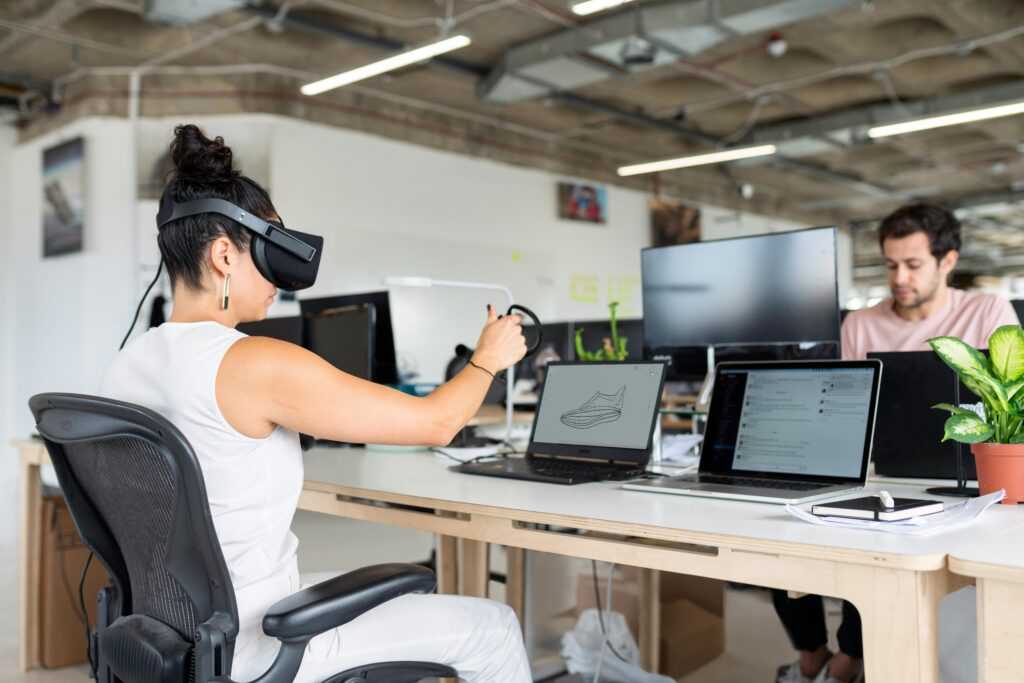
Designers have always started with rough sketches on napkins, notebooks, or tablets. It’s where imagination runs free, and the constraints of production haven’t weighed in… yet. But bridging the gap between those early ideas and a fully-realized 3D model ready for production has long required a time-consuming and expertise-heavy process.
Now, AI is flipping that workflow on its head.
With recent breakthroughs in machine learning, neural rendering, and generative modeling, it’s becoming increasingly possible to convert sketches to 3D automatically. What used to take teams of 3D modelers hours or even days can now be accelerated with AI-powered tools. But how does that work, and more importantly, what does it mean for designers, engineers, and studios moving forward?
Let’s unpack how this technology works, what it’s capable of, and where it might be headed.
1. From Sketch to Mesh: How AI Understands Your Drawing
At the heart of this transformation is computer vision. AI models trained on massive datasets of sketches and corresponding 3D models can now analyze your 2D lines and build a 3D representation from them. Instead of needing precise CAD drawings or detailed blueprints, all you need is a clear concept sketch.
These models often rely on convolutional neural networks (CNNs) and transformer-based architectures to detect shapes, curves, and spatial orientation. Once the AI interprets the sketch’s intent, it generates a 3D mesh, essentially the skeleton of your design.
What makes this impressive? Many of these systems are trained to recognize imperfect sketches. They don’t need flawless perspective or 100% accuracy. They’re built to interpret human creativity, messy lines included.
2. Textures and Details: Adding Depth and Realism
Once the mesh is generated, the next step is turning flat geometry into something visually compelling. AI takes care of this too, by applying textures, colors, and lighting properties based on visual cues from the input or prompts you provide.
Generative adversarial networks (GANs) and diffusion models can now synthesize realistic textures, wood grain, metal rust, and fabric folds without manual input. For designers eager to understand the cutting-edge techniques behind this realism, exploring the power of diffusion models offers a deeper insight into how AI creates such intricate visual details. Motion and lighting simulations can also be added, allowing you to view your model in different environments or from any angle, instantly.
This stage used to require back-and-forths with texture artists and multiple design iterations. Today, it’s approaching real-time feedback. Imagine making a slight adjustment to a sketch and seeing an updated 3D asset within seconds.
3. Optimizing for Production and Performance
A 3D model isn’t useful until it’s optimized for its intended application. Whether it’s destined for a game engine, a 3D print, or AR/VR environments, performance matters. AI is also stepping in to analyze and improve these final stages.
Automatic retopology tools powered by machine learning can restructure meshes to maintain visual integrity while reducing complexity. Similarly, AI can suggest or even apply polygon reductions, LOD (Level of Detail) configurations, or UV unwrapping setups to suit the performance requirements of your target platform.
This push for optimization not only enhances asset performance but also underscores the broader engineering principles of essential best practices for writing clean and maintainable code in all software development, including the tools that power AI-driven design.
The result? Designers don’t need to wait for technical artists to prep their files for prototyping or final implementation. That part is done fast and smart.
4. Collaborating With AI Without Losing the Human Touch
One of the biggest misconceptions is that AI will fully replace artists or designers. In reality, AI is more of a creative assistant than a replacement. It’s here to take care of the mundane, repetitive tasks that suck up time and energy, freeing you to focus on what humans do best: ideate, create, and refine.
Think of it like working with a super-fast intern who never tires. You give them direction, they give you results, and you fine-tune from there.
Of course, this requires a shift in mindset. Designers now need to learn how to “speak AI” effectively: to structure inputs, prompts, and sketches in a way that the system understands. As more teams adopt these tools, fluency in AI interaction will become a creative skillset in its own right.
5. Real-World Applications and Use Cases
From architectural mockups to video game environments, major industries are already adopting AI sketch-to-3D workflows. In automotive and product design, speedy concept iteration is shortening development cycles. Game designers are using it to quickly populate whole worlds with assets. Even fashion designers are testing AI to create 3D fabrics from flat patterns.
As more tech ecosystems embrace AI-driven workflows, expect AI-driven modeling to become a key piece of standard design toolkits.
And for those in early-stage design, check out how AI is transforming hardware prototyping to learn how sketches are just the beginning of a smart, speedy development chain.
6. Challenges We Still Need to Solve
Like any evolving tech, AI-driven 3D generation isn’t flawless. Interpreting highly abstract or stylized sketches is still a challenge. And without proper training, AI models can misread lines or output generic results.
There are also ethical considerations. When models are trained on existing designs or openly-shared work, who owns the resulting 3D content? As the industry matures, developing and adhering to responsible AI guidelines for creative workflows will be crucial to ensure fair use and original ownership.
Designers should remain cautious and informed. Combining AI’s capabilities with your custom tweaks can help keep originality and integrity in your creative process.
The Takeaway: A New Era for Designers Has Arrived
The fusion of AI and design is not science fiction anymore. It’s happening right now in studios, startups, and creative labs around the globe. From sketches to readied assets in record time, creators can now focus more on innovation and less on the technical friction that used to slow them down.